AN-003 · Embedded & Robotics · Finished
Started Feb 2026
ReBin: waste sorting on a Pi 5 in 24 hours
1.0Abstract
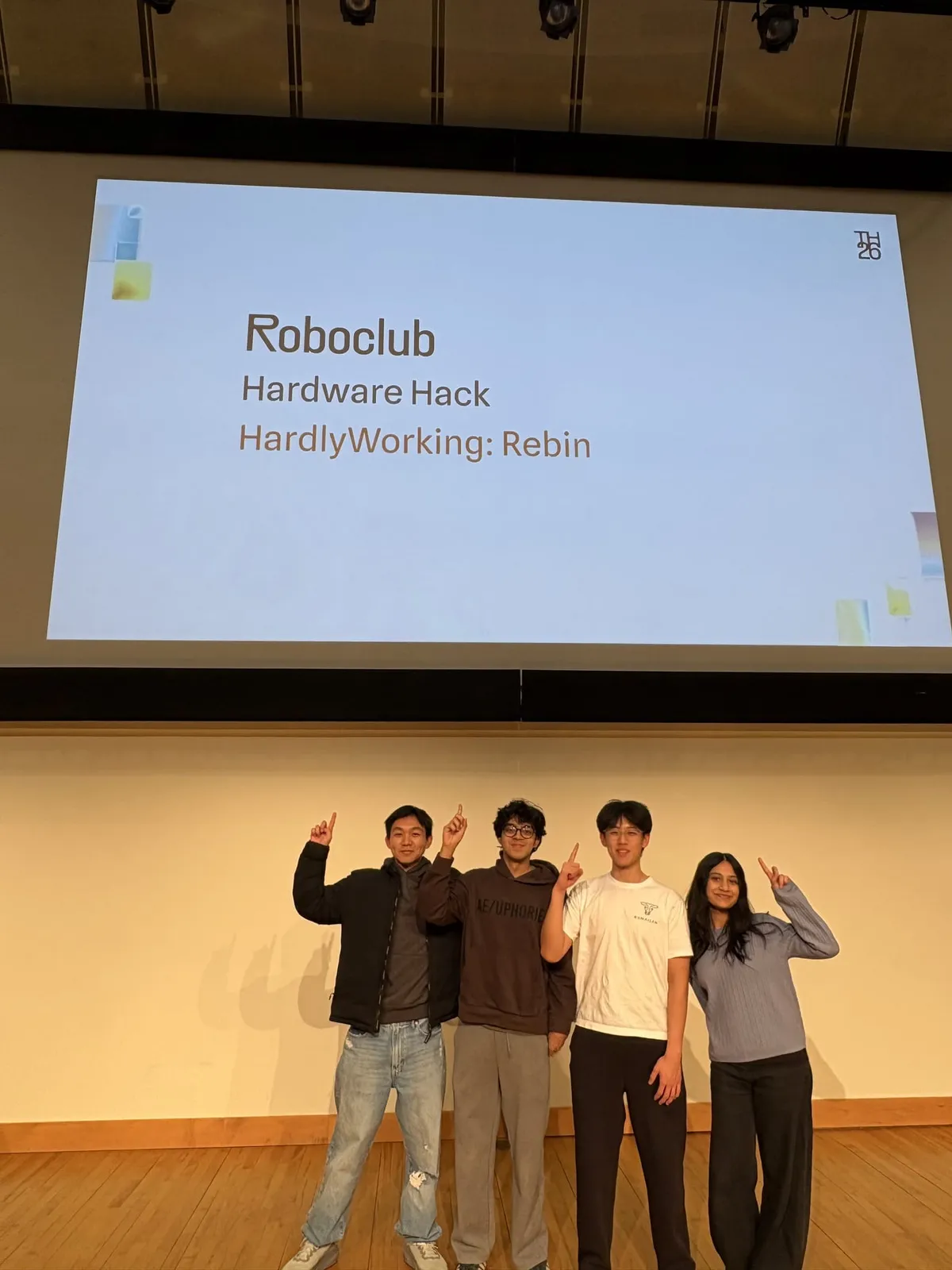
A smart-bin attachment we built in under 24 hours at TartanHacks 2026, where it won Best Hardware out of 1,000+ participants. A camera looks at what you’re about to throw away and the bin tells you which stream it belongs in, and a fullness sensor tells facilities staff which bins to empty first.
At a glance
| Parameter | Value |
|---|---|
| Status | Finished |
| When and where | TartanHacks 2026, Carnegie Mellon, in under 24 hours |
| My part | In a team: I owned the model, from training to running it on the Pi 5, and the facilities dashboard |
| Built with | Raspberry Pi 5, a camera and HC-SR04 ultrasonic sensors; YOLOv8n exported to ONNX; a FastAPI and React dashboard on SQLite |
| Code | github.com/zhaojinchu/TartanHacks |
| Result | Best Hardware, out of 1,000+ participants |
| Training data | 5,000+ hand-labeled images |
| Dashboard | Live bin levels from the HC-SR04 sensors over WebSockets, temporal and location heatmaps, and predictive scheduling with route export |
The problem
Restaurant waste is sorted into more streams than the people throwing things away can keep straight, and the people who empty the bins have no idea which ones are full until they walk the route. ReBin guides restaurant-specific disposal at the bin, and tells custodial staff where to go first.
What we built
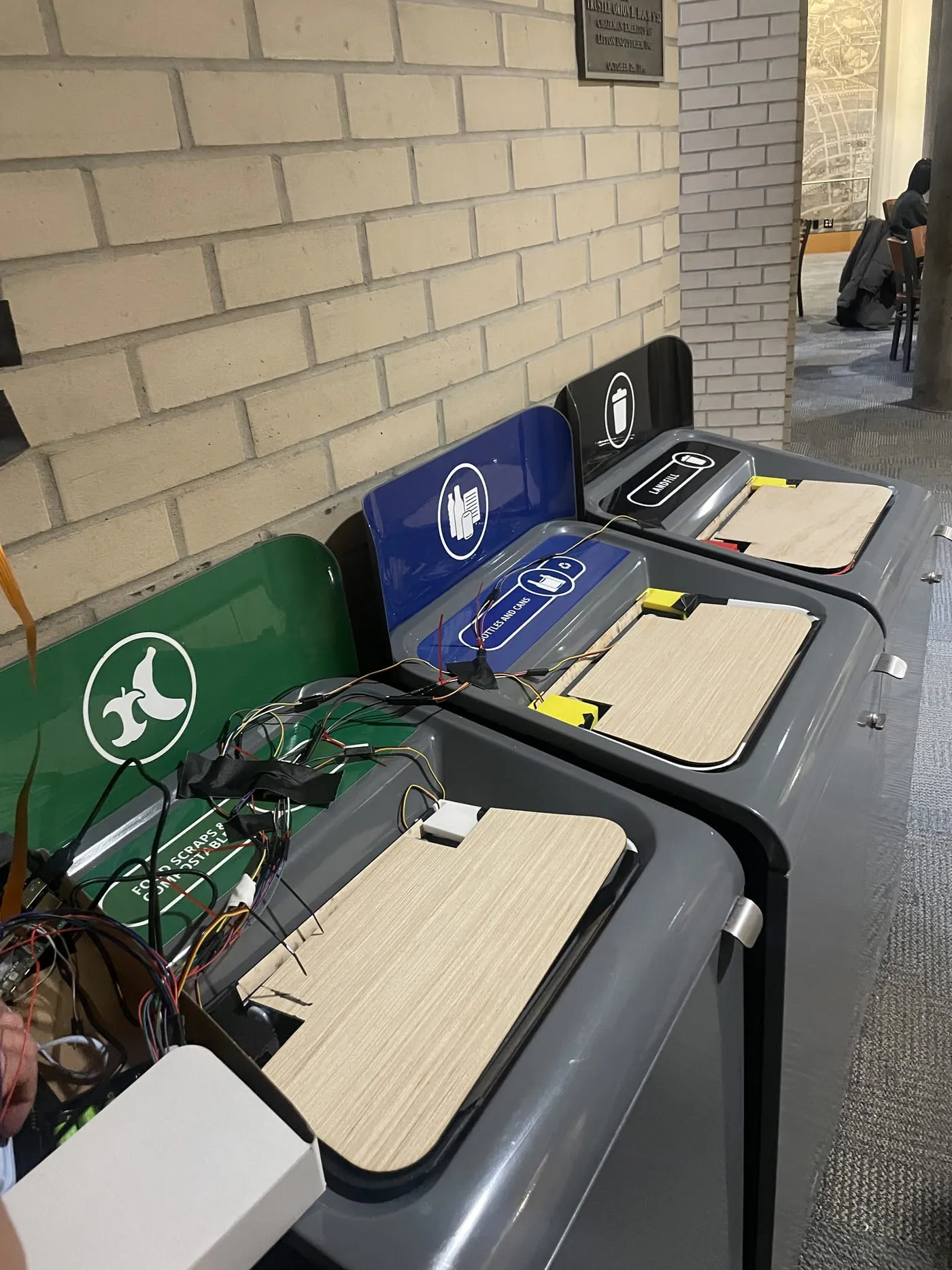
A modular attachment for an existing bin. A camera watches the opening and a YOLOv8n model, trained on 5,000+ hand-labeled images and deployed on the Raspberry Pi 5 via ONNX, recognizes the item so the bin can say which stream it belongs in. HC-SR04 ultrasonic sensors feed a FastAPI and React dashboard over WebSockets: live fullness per bin, temporal and location heatmaps, and predictive scheduling with route export, so custodial staff can prioritize pickups and plan a route instead of walking one.
We built the system end to end inside the 24 hours. I owned the model (training the YOLOv8n classifier, exporting it, and getting it running on the Pi 5) and the facilities dashboard.
What happened
Best Hardware among 1,000+ participants.